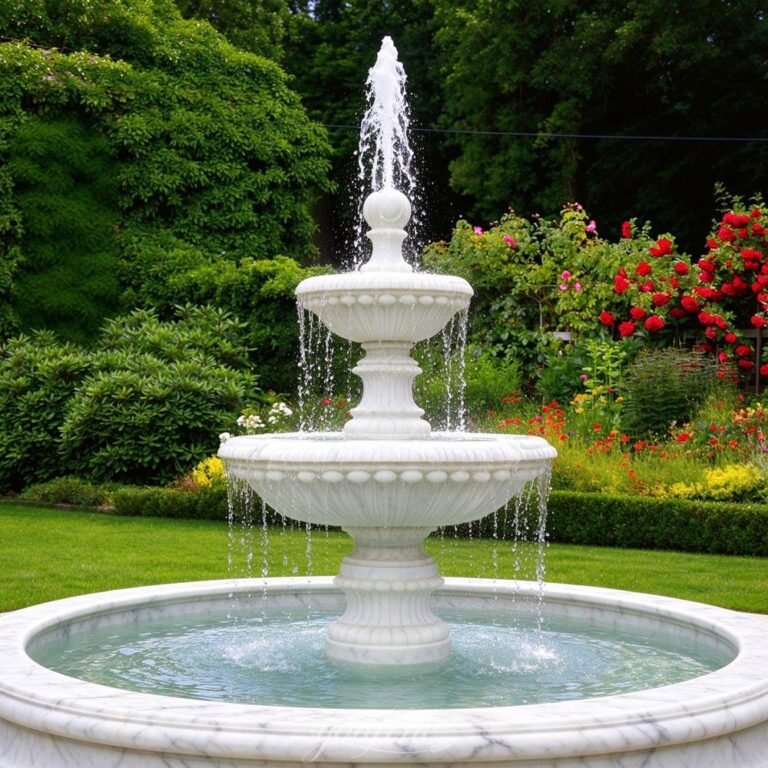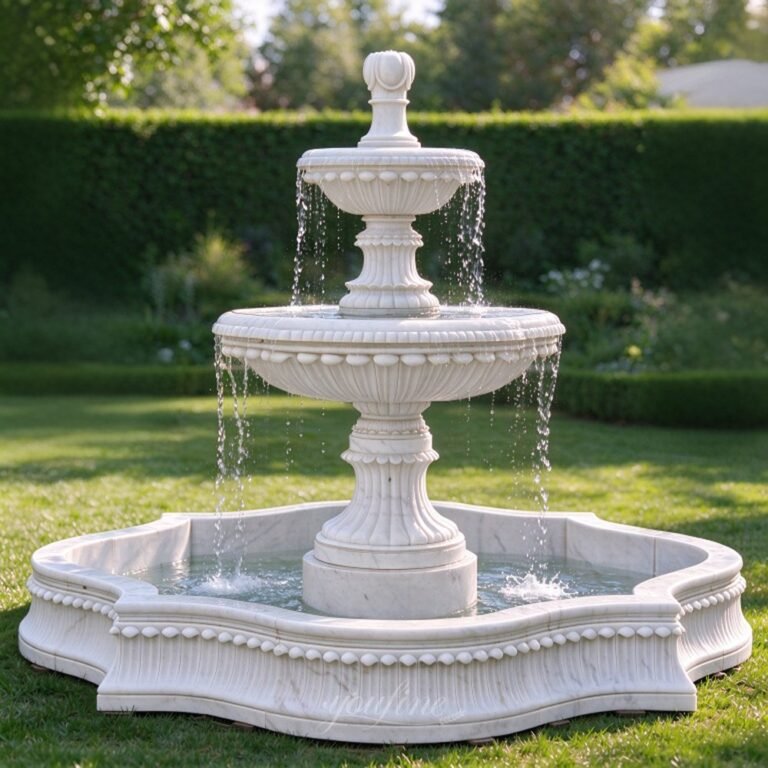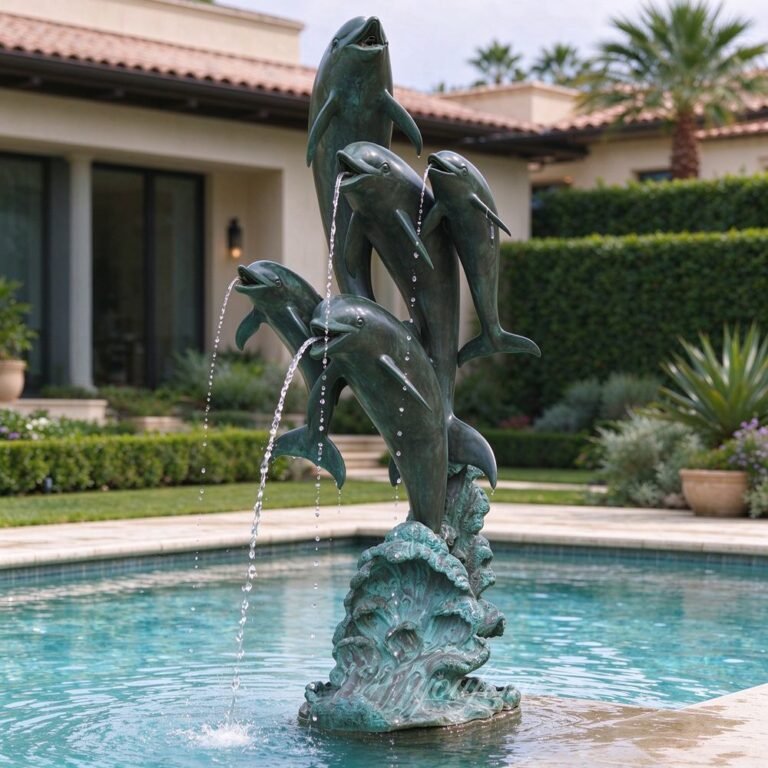
Learning how to keep fountain water clean is the secret to protecting both your investment and its aesthetic appeal. Crystal-clear water depends on four core elements working in harmony: proactive routine maintenance, adaptive seasonal care, a long-term care system, and avoiding common mistakes.
By using these four interconnected elements, you could eliminate common frustrations like algae blooms, foul odors, and cloudy water effectively, ensuring your outdoor fountain remains pristine year-round.

Why does Fountain Water Get Dirty?
Outdoor fountain water is constantly exposed to the environment, making it naturally prone to contamination. These degrading forces can be grouped into three distinct categories:
Biological Factors: Sunlight and warm temperatures rapidly trigger algae blooms and bacterial growth. This is especially true when water remains stagnant, creating a breeding ground for pests.
Physical Factors: Windborne dust, falling leaves, twigs, insects, and bird droppings easily accumulate in the basin, dissolving organic nutrients that cloud the water.
Chemical Factors: Hard water contains dissolved calcium and magnesium. As water evaporates, these minerals leave behind a cloudy residue, permanent white scaling, and clogged pump impellers.
Without proper maintenance, these three factors work together to degrade your water quality within days.
Daily and Routine Maintenance Methods
Daily and routine care is the foundation of learning how to keep fountain water clean. Consistent, proactive maintenance prevents minor debris from snowballing into mechanical failures or severe biological blooms.
Daily Maintenance
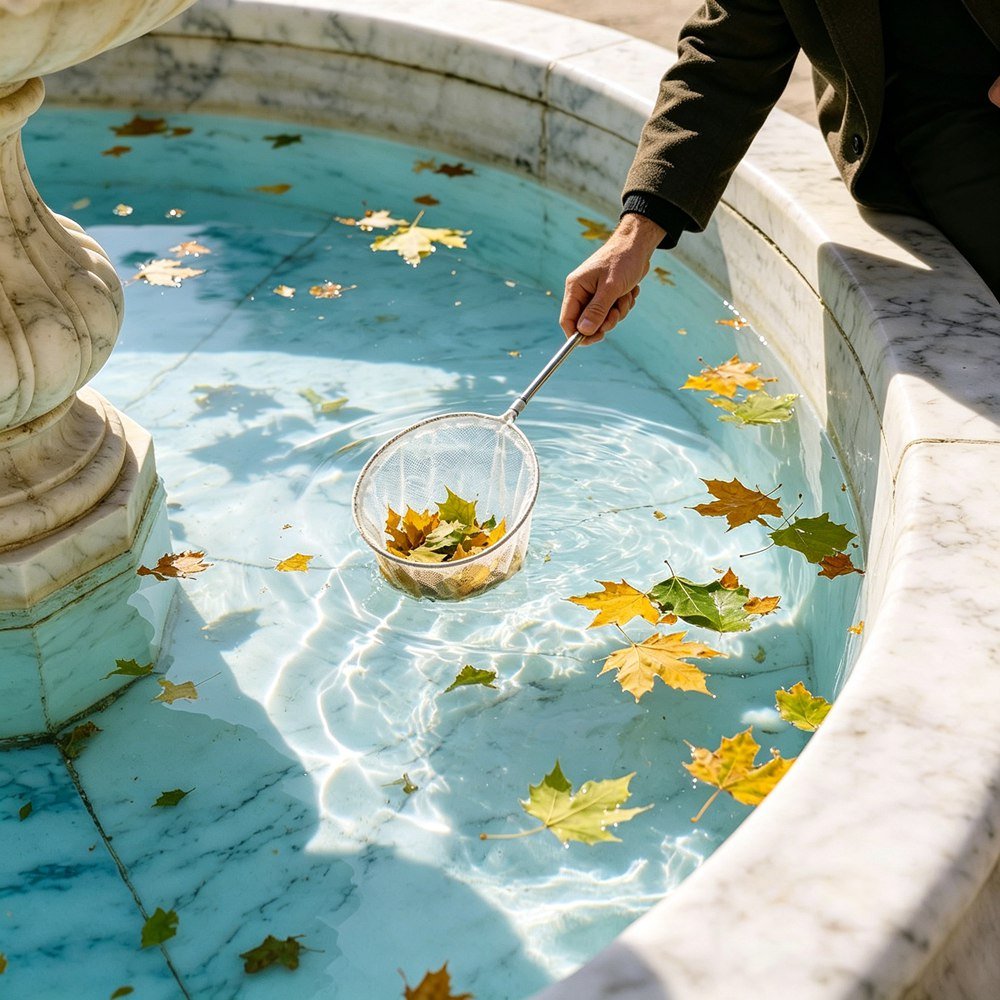
Skim Floating Debris: Use a small net to scoop out leaves, twigs, and insects before they decay and dissolve into the water.
Top Off Water Levels: Ensure the water completely submerges the pump. Low water levels force the pump to draw in air, leading to overheating and motor burnout.
Monitor Pump Flow: Perform a quick visual check to ensure water is circulating normally and no weird noises are coming from the motor.
Weekly Maintenance
Wipe Surface Grime: Lightly clean the exposed sculptural elements above the waterline with a soft microfiber cloth to prevent airborne grime from washing into the basin.
Inspect the Pump Screen: Check the pump intake and basic sponge pre-filters for early debris buildup and rinse them if necessary.
Spot-Clean Dirt: Wipe away early oily rings, smudges, or dirt patches before they chemically bond with the surface finish.
Monthly Deep Cleaning
Drain and Scrub the Basin: Completely drain the water and scrub the basin walls using warm water and a mild, pH-neutral soap or white vinegar solution.
Deep Clean the Pump System: Unplug and remove the submersible pump. Open the impeller cover to remove trapped hair, algae, and slime.
Eradicate Early Algae: Address any faint green tints or slippery surfaces immediately before they anchor into the sculpture’s microscopic pores.
Seasonal Maintenance Strategies
Fountain maintenance should also change with the seasons because weather conditions directly affect water quality and system performance.
| Season | Main Focus | Key Actions |
|---|---|---|
| Spring | System restart | Clean winter residue, test pump system |
| Summer | Algae control | Increase cleaning frequency, improve circulation |
| Autumn | Leaf prevention | Remove falling leaves frequently |
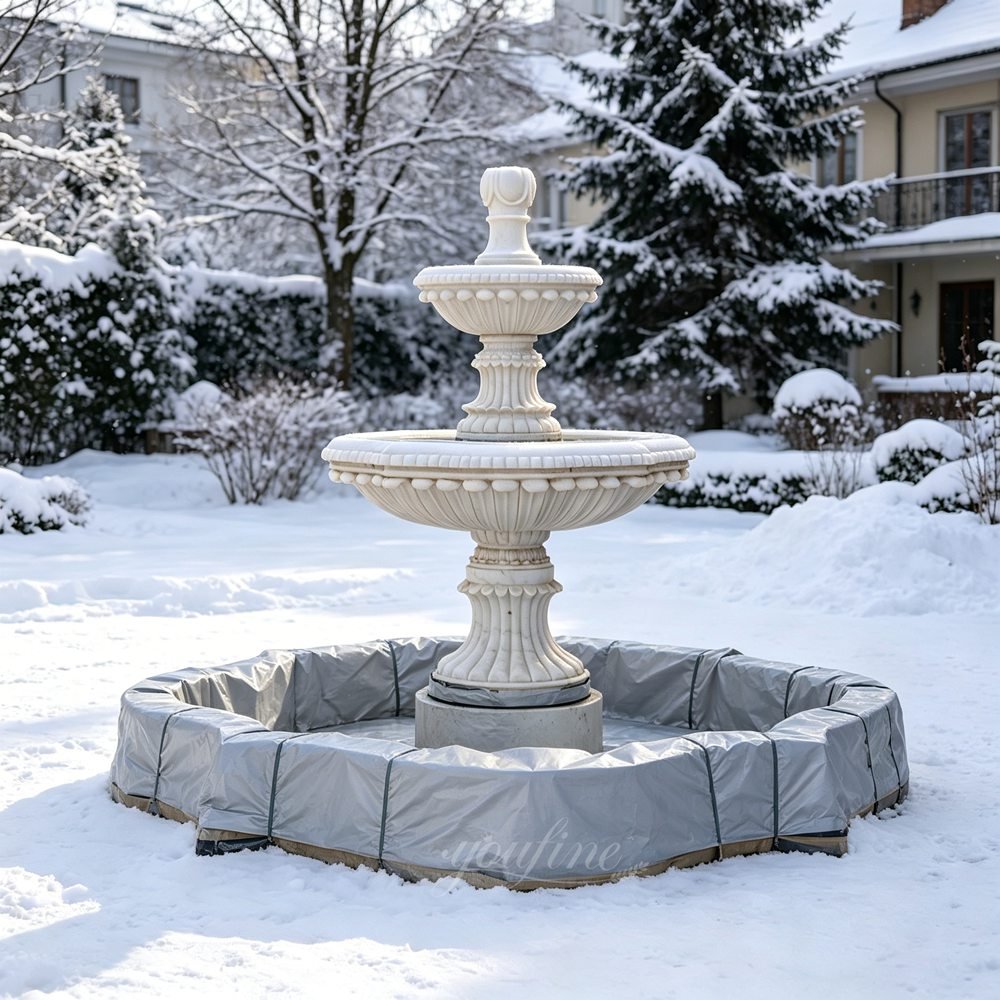
| Winter | Freeze protection | Drain water, protect the pump and pipes |
In spring, fountains often need a full restart after months of inactivity. Summer requires more attention because heat and sunlight accelerate algae growth. Autumn brings heavy leaf fall, which can quickly clog filters and pumps. Winter is mainly about protecting the system from freezing damage.
Seasonal maintenance is often overlooked, but it is essential for keeping fountains stable throughout the year.
Long-Term Fountain Water Care System
Long-term water clarity depends heavily on system design, not just your manual cleaning habits. To keep your fountain water clean automatically, you must optimize the underlying infrastructure through three pillars:
Advanced Water Treatment
Enzyme-Based Cleaners: Use natural, enzyme-driven clarifiers weekly. They break down organic waste, sunscreen oils, and bird droppings biologically without harming the environment.
Targeted Algaecides: Deploy specialized, non-chlorine algaecides to prevent biological spores from taking root.
Distilled or Purified Water: For indoor installations or smaller outdoor features, fill the system with distilled or reverse-osmosis (RO) water. Because it contains no minerals, it eliminates white calcium scaling.
Upgraded Filtration Systems
Sponge Pre-Filters: Fit your pump with high-density sponge pre-filters to capture fine floating particles before they enter the main impeller.
UV (Ultraviolet) Sterilizers: For large estate or landscape fountains, integrate a UV clarifier. It neutralizes algae and bacteria on a cellular level as water passes through the light chamber.
External Filtration: For massive commercial displays, implement an external sand or cartridge filter system to handle heavy environmental loads automatically.
Continuous Water Circulation
24/7 Operation: Keep the pump running continuously. Moving water prevents stagnation, which naturally discourages mosquitoes, pests, and floating algae from settling.
Oxygen Level Boost: Constant circulation improves oxygen levels in the water, creating an environment where healthy, water-clearing enzymes thrive while foul-smelling anaerobic bacteria die off.
The Golden Rule of Circulation: Without continuous movement, even daily manual cleaning will fail to keep your fountain water crystal clean over time. Stagnation is the ultimate enemy of water clarity.

Common Mistakes to Avoid
Many fountain water problems are not caused by the environment itself, but by small maintenance mistakes that are often ignored. Avoiding these issues can significantly improve water quality and extend the life of your fountain system.
❌ Using household bleach
Bleach may seem like a quick cleaning solution, but it can damage pump seals, metal parts, and protective surface coatings. It can also disrupt the water balance.
❌ Ignoring the pump system
The pump is the core of the fountain. If it is not cleaned regularly, debris can accumulate inside and eventually cause overheating or failure.
❌ Over-cleaning with harsh tools
Using abrasive brushes or strong acids can scratch the surface of stone or metal fountains. These micro-scratches actually make it easier for algae to attach and grow.
❌ Delaying early algae removal
Small green patches can spread quickly if ignored. Early cleaning is always easier and more effective than deep cleaning later. For detailed methods on removing algae, you could read this article: How to Prevent Algae in Outdoor Fountains.
FAQ
Can I use tap water?
Yes, but it is not recommended for the long term. Tap water contains minerals that leave stubborn white scale rings and clog the pump. For pristine water, distilled or reverse osmosis (RO) water is the best choice.
How do I naturally clean fountain water?
Use natural enzyme-based water clarifiers. These eco-friendly treatments biologically break down organic waste, sunblock oils, and bird droppings before they can cloud the water or feed algae, without relying on harsh chemicals.
Is fountain cleaner safe for birds and pets?
It depends on the product. Always choose treatments explicitly labeled “Bio-Degradable,” “Eco-Safe,” or “Wildlife Safe.” Avoid heavy copper-based algaecides. Certified eco-safe enzymes will keep water clear without harming local wildlife.
How often should I change the water?
For outdoor landscape fountains, perform a complete drain and refill every 1 to 3 months. For indoor fountains or features using distilled water, you can easily extend this to every 4 to 6 months.
How do I remove white mineral scale?
Drain the fountain and apply a mixture of equal parts white vinegar and warm water to the scale. Let it sit for 10–15 minutes to break down the minerals, then gently wipe it away with a microfiber cloth or nylon brush.
Final Thoughts
Keeping fountain water clean is not about doing one big cleaning session. It is about building a simple and consistent system that works over time.
When you combine regular daily care, seasonal adjustments, and a reliable long-term water system, most common problems such as algae, odor, and cloudiness can be easily controlled. A well-maintained fountain is cleaner and also more stable, more efficient, and longer lasting.
After learning about the maintenance methods that keep the water in the fountain clean, if you are also interested in purchasing a marble fountain, bronze fountain, stainless steel fountain, or corten steel fountain, you could simply contact us. As a professional outdoor fountain supplier, we would ensure your satisfaction.