Circular driveway fountains are commonly found in high-end residences, estates, hotel entrances, and public building plazas. Compared to ordinary flowerbeds or sculptures, a fountain is not only a visual focal point but also the “design core” of the entire driveway space.
However, in actual projects, choosing the wrong size, height, or material for the fountain often leads to safety hazards, increased maintenance costs, and even rework problems.
This article will take a professional decision-making approach to systematically analyze how to select the appropriate marble fountain for a circular driveway, going beyond simply considering aesthetics.
I. What is a Circular Driveway Fountain?
1. Definition
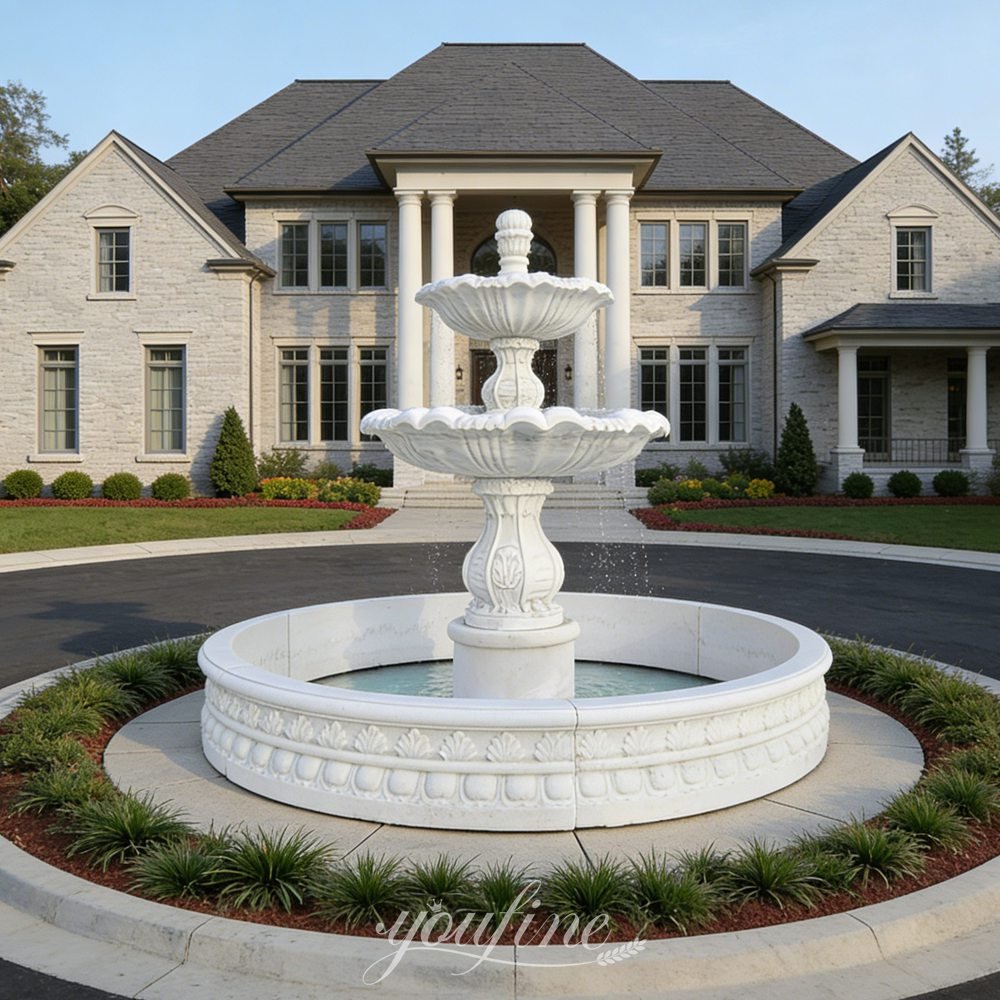
A circular driveway fountain is typically located in the central island of a circular driveway, with vehicles circulating around the fountain in a single or double direction. It serves as both a visual focal point of the spatial axis and an iconic element of the entrance area.
2. Applicable Scenarios
- High-end private villas and estates
- Main entrances of hotels and resorts
- Private clubs, museums, and forecourts of public buildings
3. Core Value
- Enhances the sense of ceremony at the entrance
- Elevates the overall architectural quality
- Guides vehicular traffic flow and enhances spatial order
However, it’s important to note that the fountain here is primarily “part of the traffic environment,” and only secondarily a landscape decoration.
II. 5 Key Decision Factors to Consider in Professional Design
1. Size and Proportion: Traffic Safety Takes Priority Over Visual Impact
Many blogs only emphasize “proportionate design,” but in real-world projects, designers are more concerned with:
- The turning radius of the circular driveway
- The turning radius of the circular driveway
- Common vehicle types (SUVs, pickup trucks, commercial vehicles)
- Whether there is a need for fire or maintenance vehicle access
Professional experience suggests:
- The fountain diameter should generally not exceed 30%-40% of the inner diameter of the circular driveway.
- A central island that is too large will compress the turning space.
- Too small, and it will appear cheap and disproportionate.
Size is not an aesthetic issue, but a matter of traffic efficiency.
2. Fountain Height and Layers: Avoiding Obstruction of View and Driving Distractions
This is a crucial point often overlooked in many “inspiration articles.”
Tall fountains are visually stunning from the front,
But in practical use, they may:
- Obstruct the driver’s view
- Cause glare due to nighttime lighting and water reflections
- The central water jet can cause driver distraction
Professional recommendations:
- Fountain height in driving areas is usually controlled between 1.2 and 2.5 meters.
- Multi-tiered water features are preferable to a single tall jet.
- The central nozzle should avoid shooting straight up into the air; softer water patterns are preferred.
3. Material Selection: Why Marble is More Suitable for High-End Circular Driveways
In circular driveway scenarios, common materials include concrete, resin, and stone, but natural marble remains the preferred choice for high-end projects for the following reasons:
Core Advantages of Marble:
- Stable visual veins, suitable for entrance spaces
- Allows for fine carving, with clear layers and lines
- Highly compatible with classical, European, Mediterranean, and neoclassical architecture
- Strong durability, suitable for long-term outdoor display
However, professional decision-making should also consider:
- Climate (In freeze-thaw zones, high-density, frost-resistant marble should be selected, while avoiding travertine that is prone to cracking)
- Anti-slip treatment (especially important for fountain edges)
- Post-installation polishing and maintenance costs
Marble isn’t “good just because it’s natural,” but rather “good only if the right type is chosen.”
4. Style and Architecture Integration: The Fountain as Part of the Building
Professional design doesn’t treat the fountain as a separate element, but rather considers it as part of the overall design:
- Classical or European architecture → Multi-tiered, sculpted marble fountains
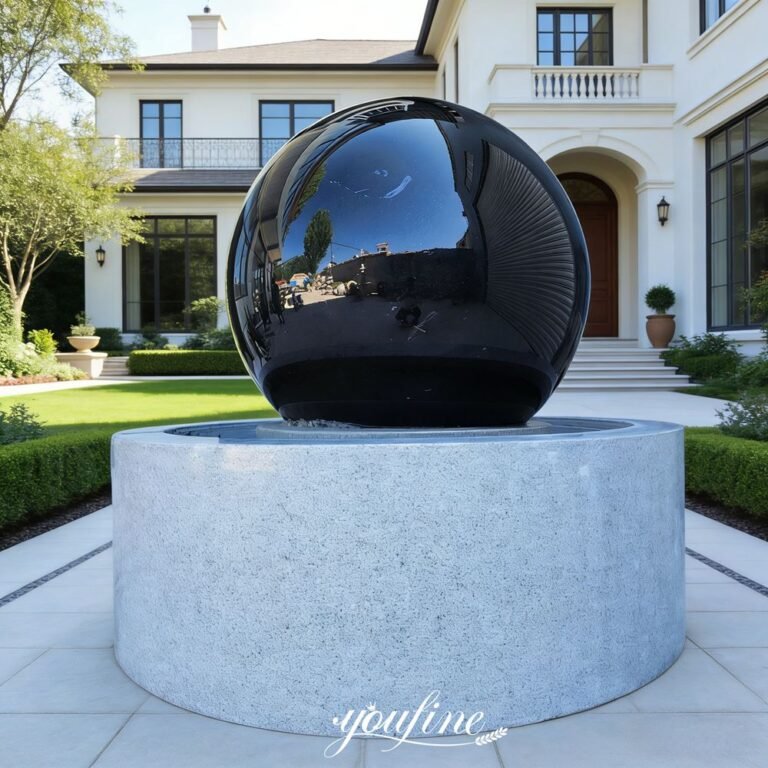
- Modern or minimalist architecture → Simple, low-profile stone water features
- Manor or castle-style entrance → Central sculpture + pool combination
An incorrect style match will make the fountain look like an afterthought or a separate decorative item, rather than an integral part of the overall design.
5. Functionality and Daily Use: Long-term maintenance determines the experience
Many projects encounter problems only after completion:
- Difficulties in repairing the nozzles
- Inconvenient cleaning of the pool
- Water splashing onto the roadway, leading to efflorescence or slippery surfaces on the paving stones
Professional considerations include:
- Whether the pump room can be maintained from the side
- Whether drainage and overflow systems are provided
- Whether the fountain edges pose a safety hazard to tires or pedestrians
III. Six Common Types of Marble Circular Driveway Fountains
The following six types of marble circular driveway fountains are the most frequently chosen styles by European and American clients.
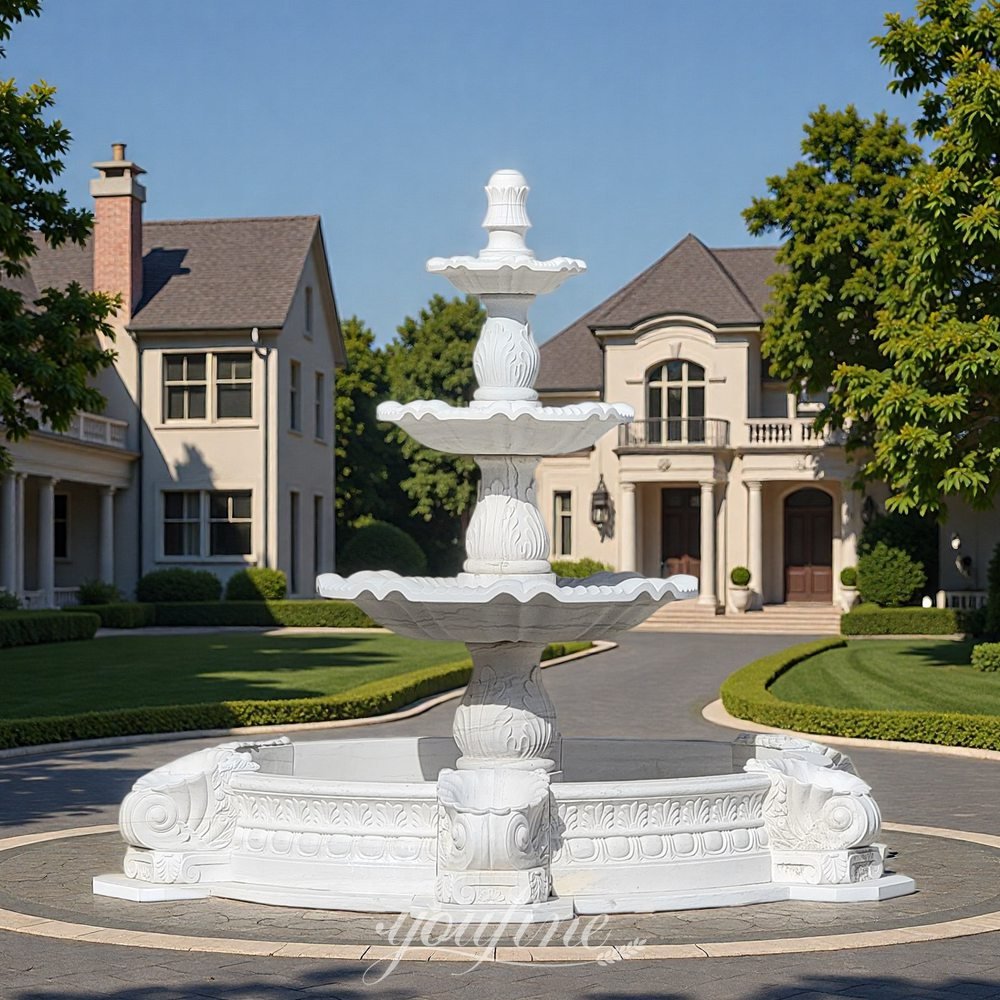
1. Tiered Marble Fountain:
Features:
- Multi-tiered water structure
- Stable water flow, gentle sound
- Classic design, highly adaptable
Why European and American clients choose it most often:
- Less prone to errors
- Compatible with most architectural styles
- High safety, ease of maintenance, and aesthetic appeal
This is the “basic yet top-tier” option for circular driveway fountains.
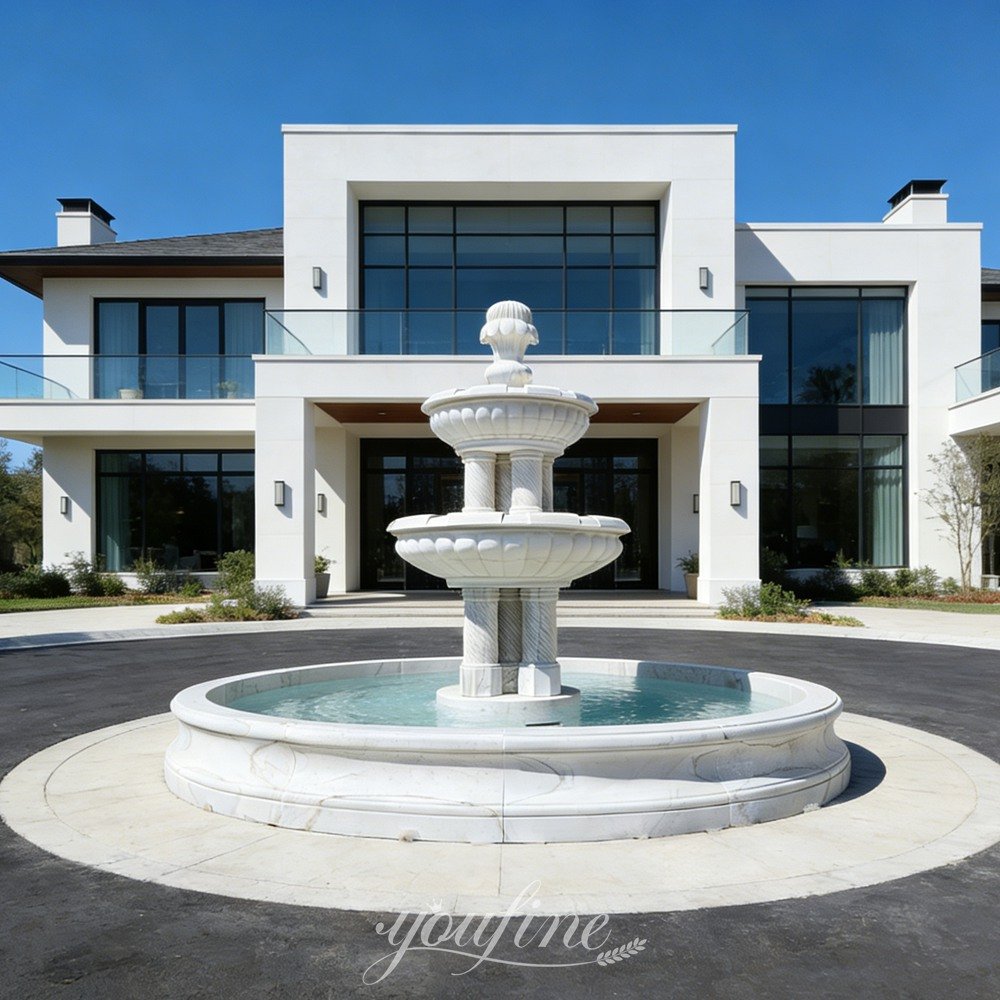
2. Marble Column Fountain:
Features:
- No human or animal figures
- Primarily uses architectural elements
- Simple lines, strong sense of proportion
Why European and American clients choose it:
- More modern and rational
- Minimal driving distraction
- Especially suitable for neoclassical and modern villas
Ideal for clients who don’t want too much decoration, but still need a central landscape feature.
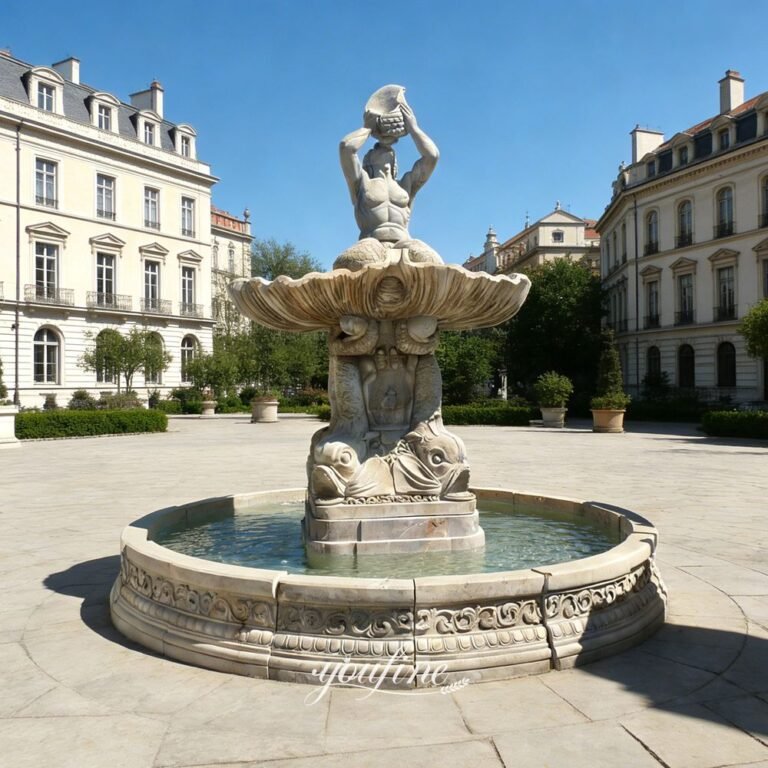
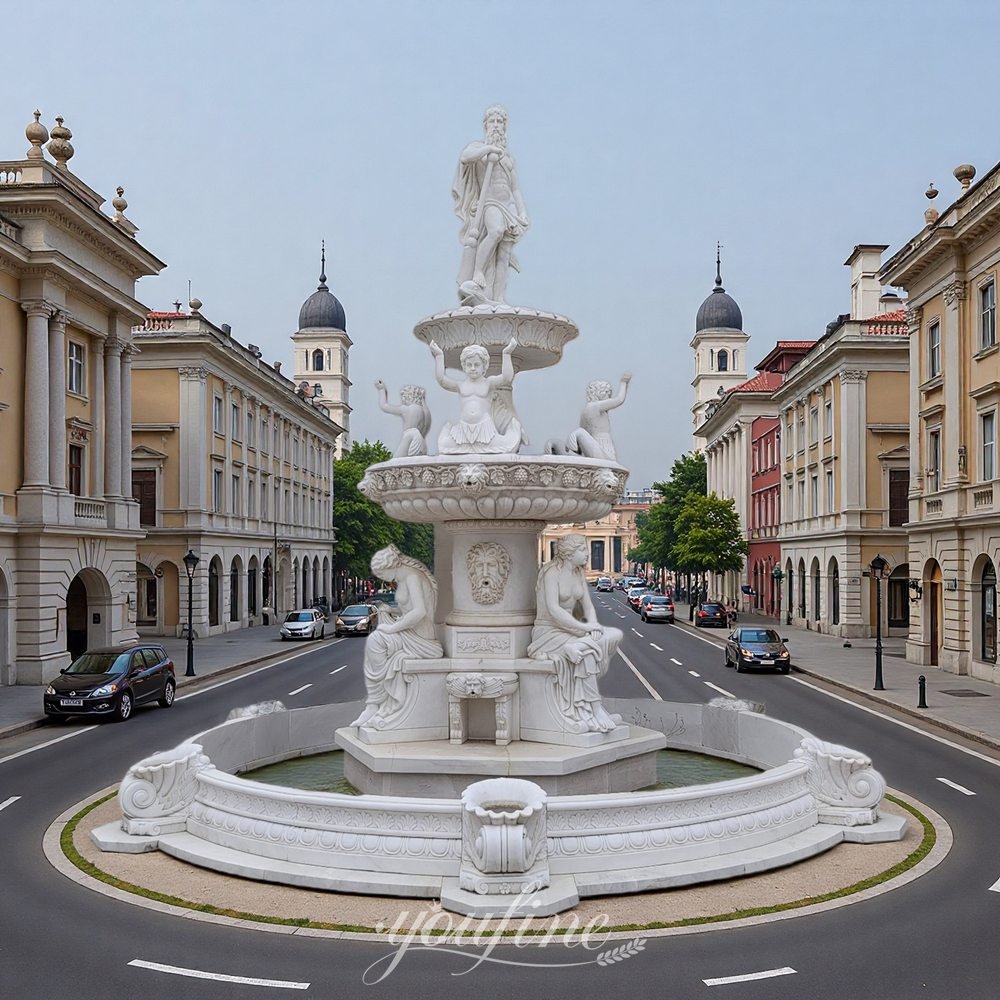
3. Marble Neptune Fountain
Features:
- Features Neptune as the central sculpture
- Strong visual impact and a powerful focal point
- Commonly found in European or Italian-style architecture
Real preferences of European and American clients:
- Often used for estate-level or hotel, landmark entrances
- More suited for “symbolic display” rather than ordinary residences
- The height must be strictly controlled to avoid visual obstruction and interference with driving.
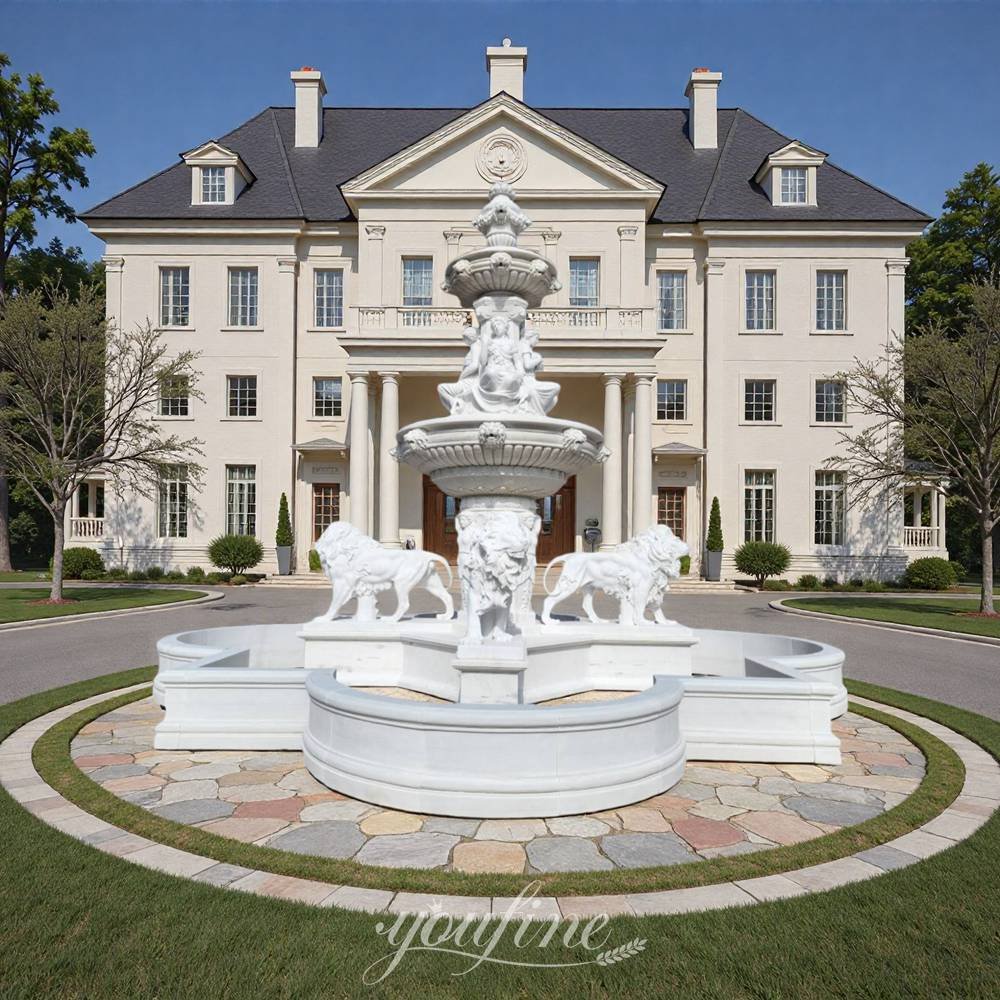
4. Marble Lion Fountain
Features:
- Lions symbolize strength, protection, and nobility
- Stable design, unlikely to go out of style
- Symmetrical design
Why European and American clients choose it:
- Perfectly matches traditional European and American entrance aesthetics
- Animal sculptures are more widely accepted than human sculptures
- Provides a strong sense of security, suitable for the central area of driveways
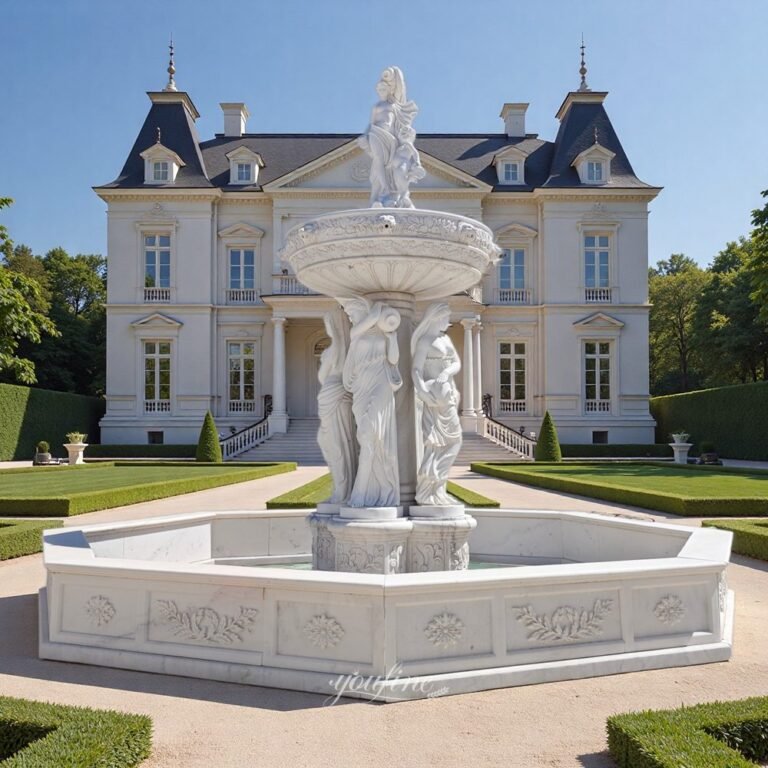
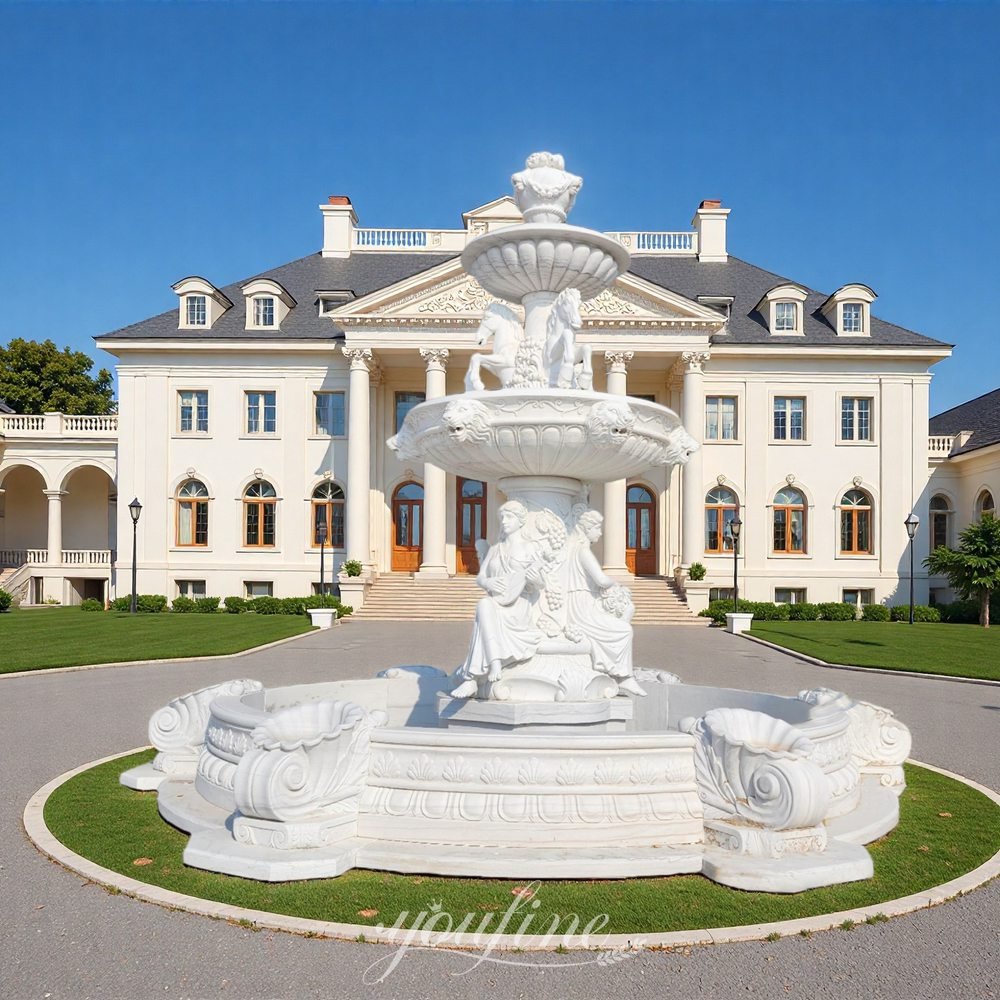
5. Marble Female Statue Fountain
Features:
- Features a female figure as the central element
- Style is more artistic and decorative
- Requires high precision in carving
Real-world application in European and American projects:
More commonly found in gardens or courtyards
When used in driveways, typically:
- The figure’s posture is restrained
- The height is relatively low
- The water flow is gentle
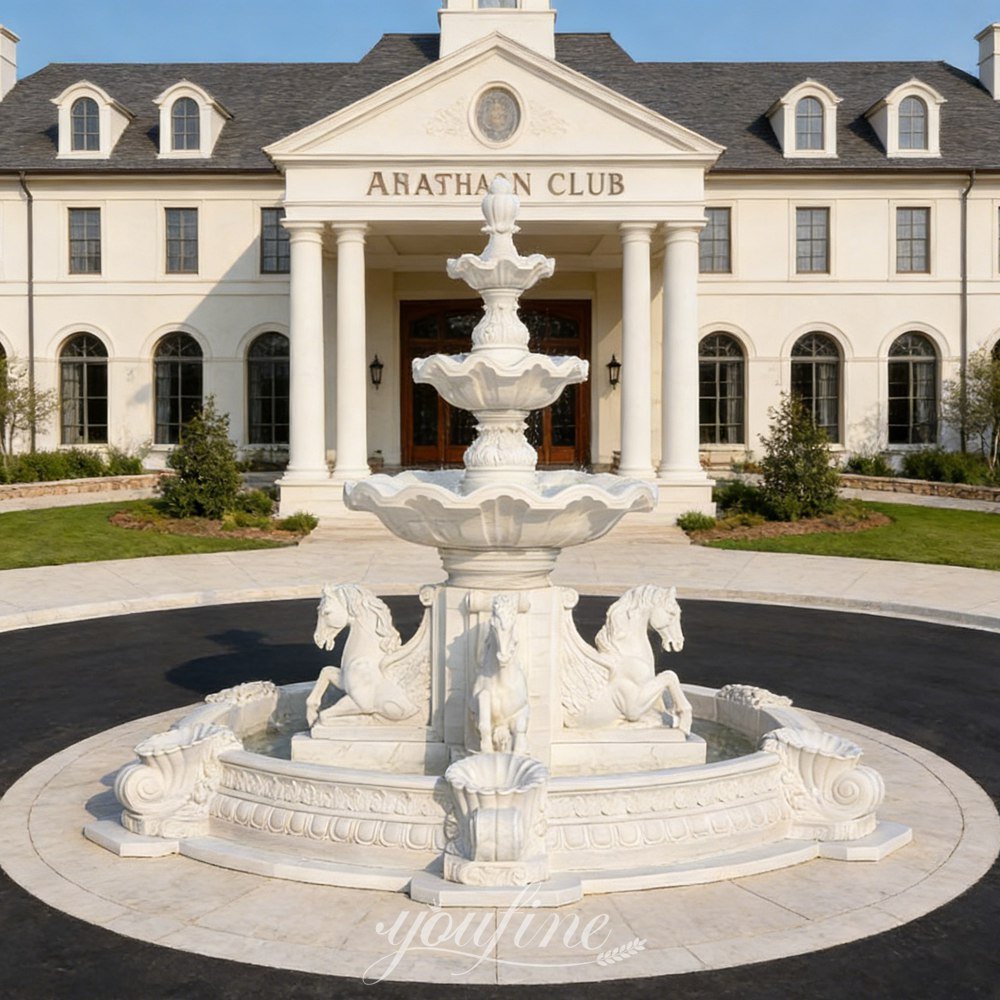
6. Marble Horse Water Fountain
Features:
- Strong sense of movement, symbolizing freedom and strength
- Significant visual impact
European and American client selection logic:
Prefer natural, unexaggerated horse sculptures
Often used in:
- Large estates
- Farm-style mansions
- Private club entrances
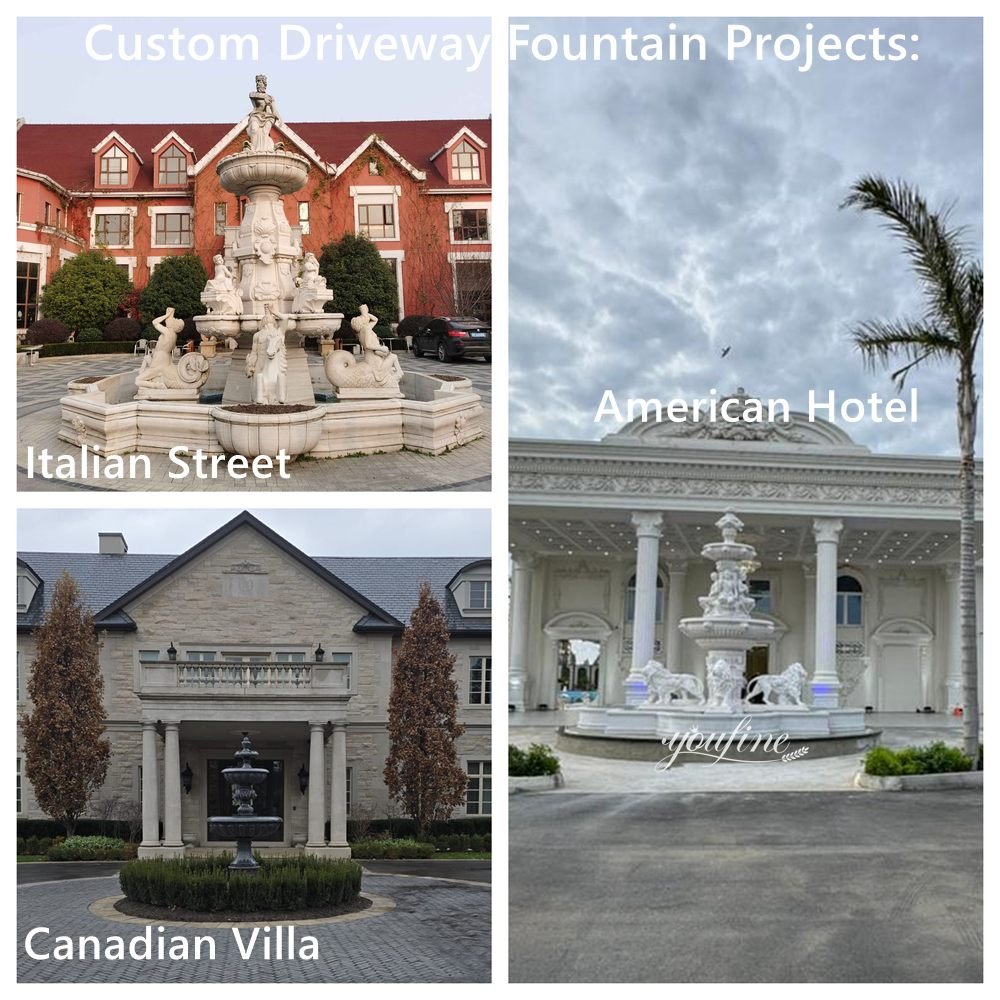
IV. Why do Many Circular Driveway Fountains end up Being Custom-Made?
In practical engineering projects, ready-made fountains are more commonly used in gardens or courtyards, while circular driveway fountains often face the following challenges:
- Mismatched dimensions
- Inappropriate height
- Inability to match the architectural style
Therefore, custom-made marble fountains have become the mainstream choice, especially in the following situations:
- High-end residential or commercial entrances
- Clearly defined architectural style
- High requirements for safety and proportion
V. FAQ
Q1: Are marble fountains suitable for areas with frequent vehicle traffic?
Yes, but it is necessary to:
- Control the height
- Design a reasonable spray range
- Ensure anti-slip and drainage measures are in place
Q2: What is the price range for circular driveway marble fountains?
This is usually affected by the following factors:
- Size and number of tiers
- Type of marble
- Whether it is custom-made
- Complexity of carving
The overall price range is quite wide. For a regular fountain with a diameter of about 3 meters, the price is between $3,000 and $6,000. Please refer to this article for more details: How Much Does a Marble Fountain Cost?
Conclusion:
A circular driveway fountain is an ordinary landscape decoration, and a point where architecture, traffic, and landscape converge. A truly successful marble fountain should remain safe, harmonious, easy to maintain, and integrated with the architecture even after many years of use. This is the significance of professional decision-making.
As a professional marble fountain supplier, we have extensive experience in providing fountains for driveways and other outdoor locations. If you need a custom-made driveway fountain, don’t hesitate to get in touch with us directly. We look forward to working with you.