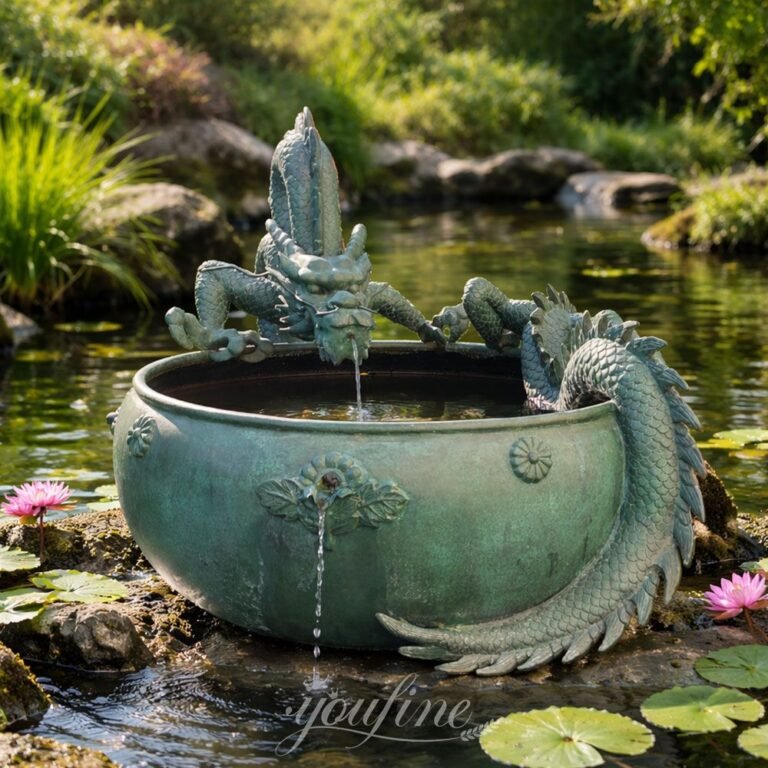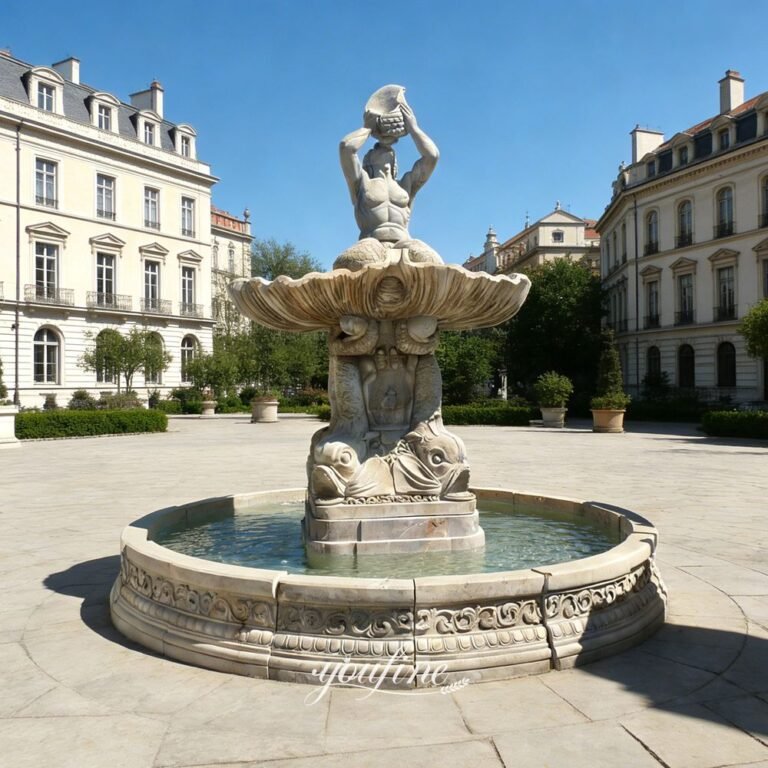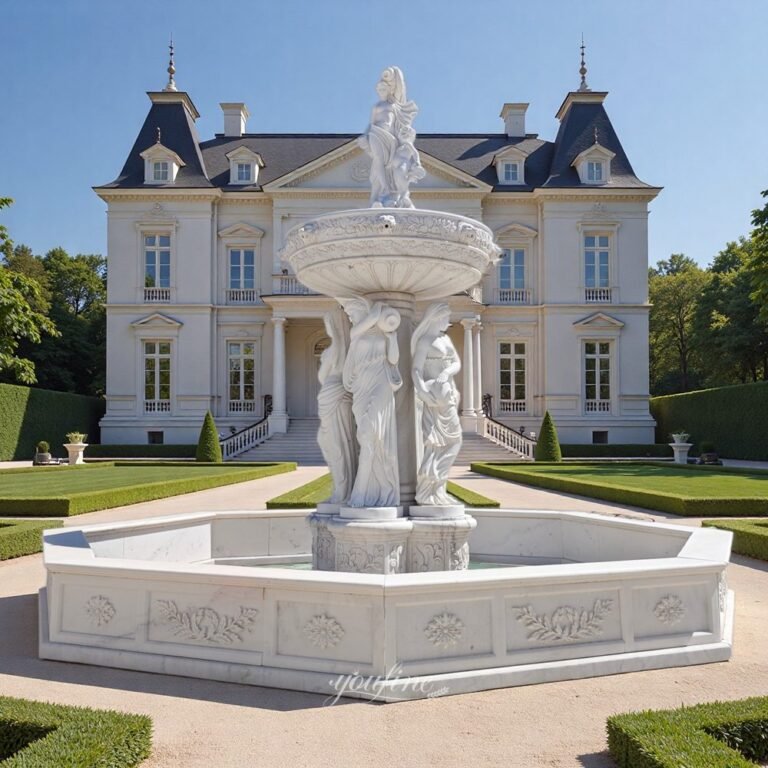
In the context of catholic churches, marble fountains are decorative elements and also symbols of faith and creators of atmosphere. Located at church entrances, courtyards, cloisters, or prayer gardens, they play a crucial role in calming the mind, encouraging contemplation, and reinforcing the religious atmosphere.
Therefore, choosing a suitable marble water fountain for a church is not simply a matter of “selecting a nice-looking fountain,” but requires comprehensive consideration of various factors, including sound, size, style, symbolic meaning, safety, and long-term usability. Below, we will systematically analyze the key factors that churches should focus on when selecting a marble water fountain.
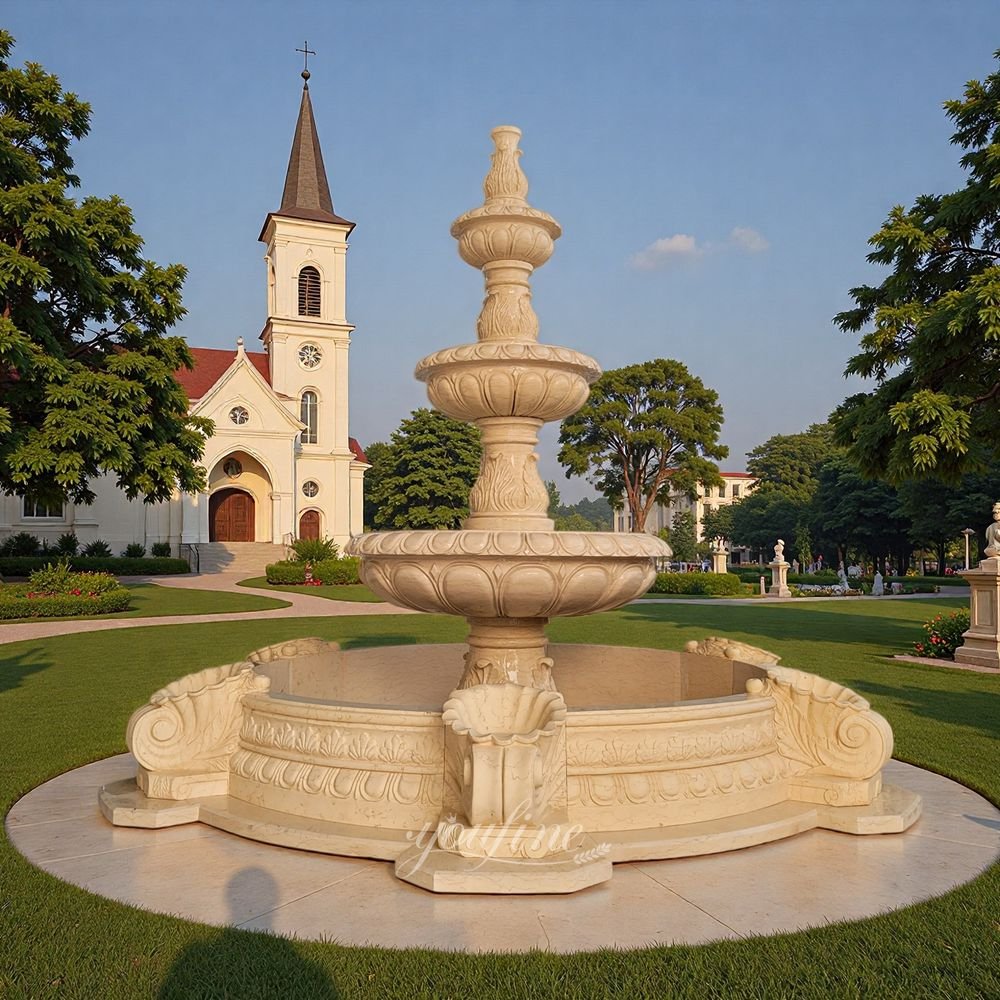
9 Key Considerations for Choosing a Church Fountain:
1. Water Sound: A Soothing and Tranquil Background Sound
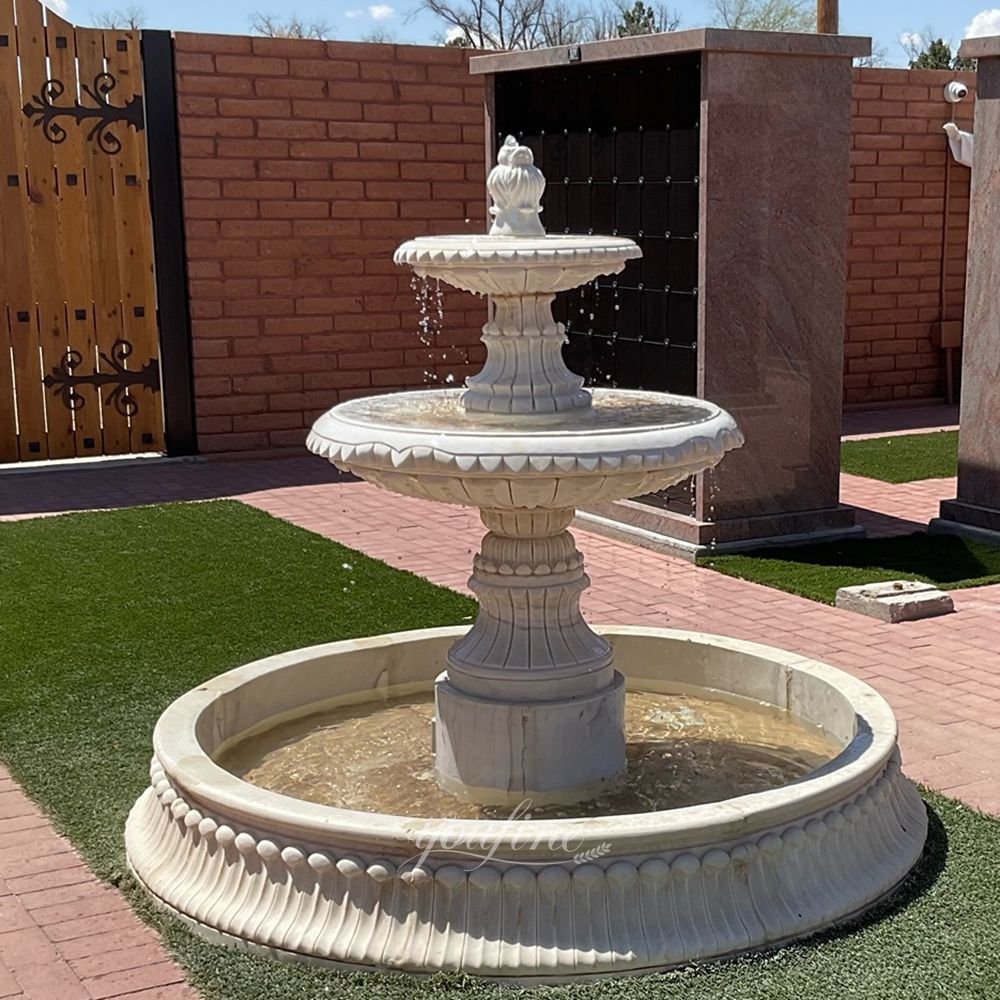
Churches are sacred places for meditation and prayer. The sound of the fountain’s water flow should not be a noisy “splashing” sound, but rather a gentle, crisp, and rhythmic dripping sound.
This sound can effectively mask external traffic noise and help worshippers enter a peaceful state of mind, rather than causing distraction.
2. Size and Proportion: Harmony with the Architectural Space
The choice of size is crucial. An overly large fountain will overpower the surrounding architecture and diminish its grandeur; an overly small one will appear cramped.
We need to calculate the diameter and height of the fountain based on the openness of its location within the church, ensuring that it visually complements the magnificent proportions of the church.
Small fountains
Suitable for prayer gardens, monastery courtyards, and memorial corners
Medium-sized fountains
Commonly found in church courtyards, cloisters, or entrance transition spaces
Large fountains
More suitable for church squares or public religious spaces
3. Colors: Visual Purity and Sacred Symbolism
Colors often directly convey emotions. Church fountains typically favor visually pure and dignified colors:
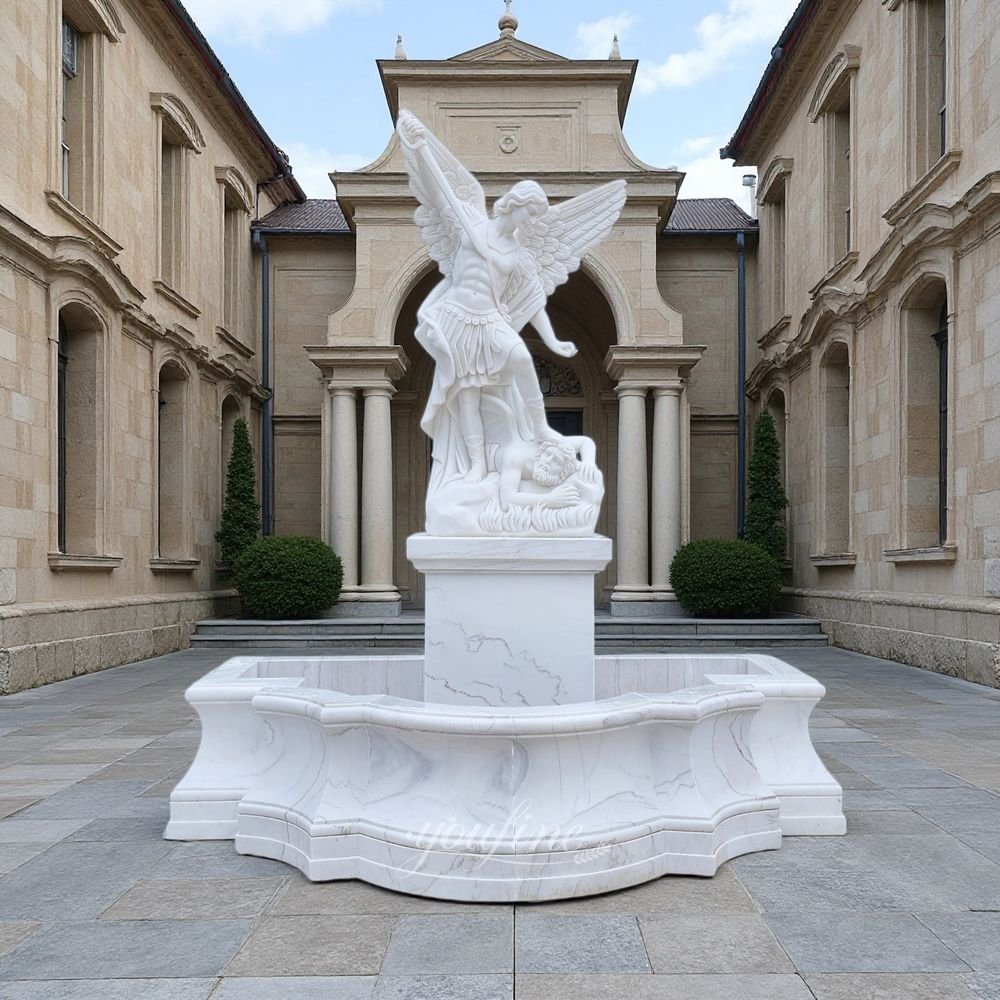
White (such as Carrara white): Symbolizes holiness and purity.
Beige and light gray: Evoke a sense of warmth, humility, and timeless serenity.
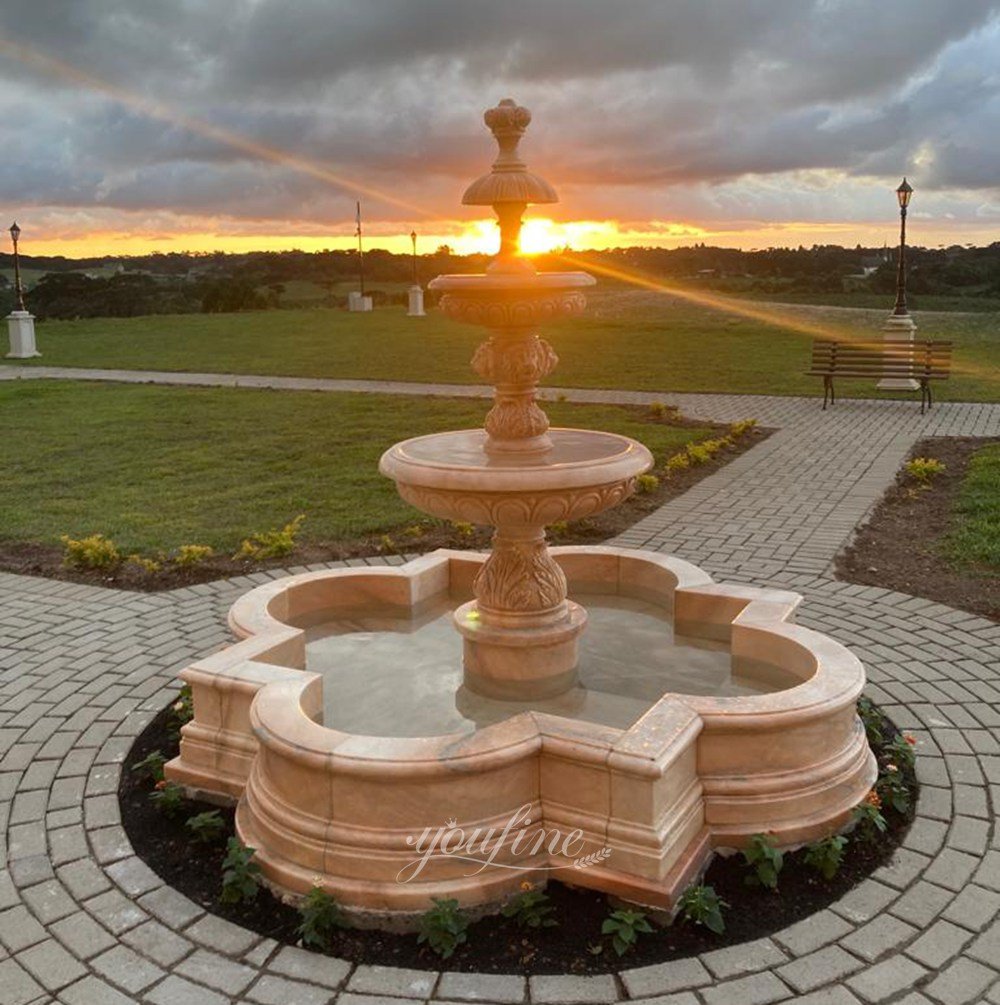
Sunset red: Can produce a soft glow under certain lighting conditions, enhancing the sense of sacredness.
4. Style: Unity of Theme and Environment
The style of the fountain should be consistent with the architectural style of the church (such as Gothic, Romanesque, or modern minimalist):
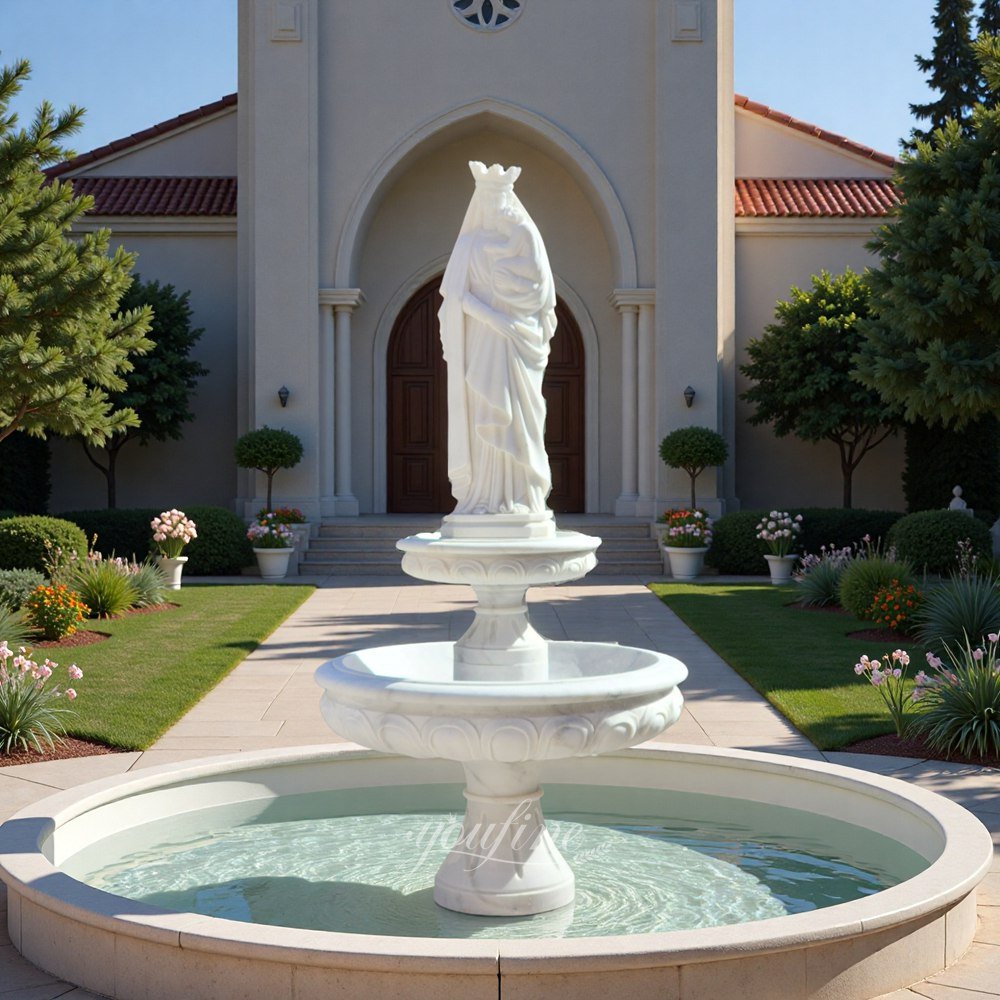
Classic Tiered Fountains: Multi-tiered structures, symbolizing order and eternity, with elegant lines, suitable for most traditional churches.
Decorative Religious Fountains: Featuring sculptures of the Virgin Mary, Jesus, or angels as the central decoration, making the fountain itself a work of art that conveys religious teachings and is highly impactful.
The fountain should serve the church, not become the “main attraction.”
5. Customization Capabilities: Infusing a Unique Soul
Every parish has its unique history. Through customization, you can engrave specific parish logos, Bible verses, or commemorative dates onto the marble.
Additionally, custom sizing to meet specific spatial requirements ensures the fountain fits perfectly into its designated location.
Customization isn’t about complexity, but about finding the “perfect fit.”
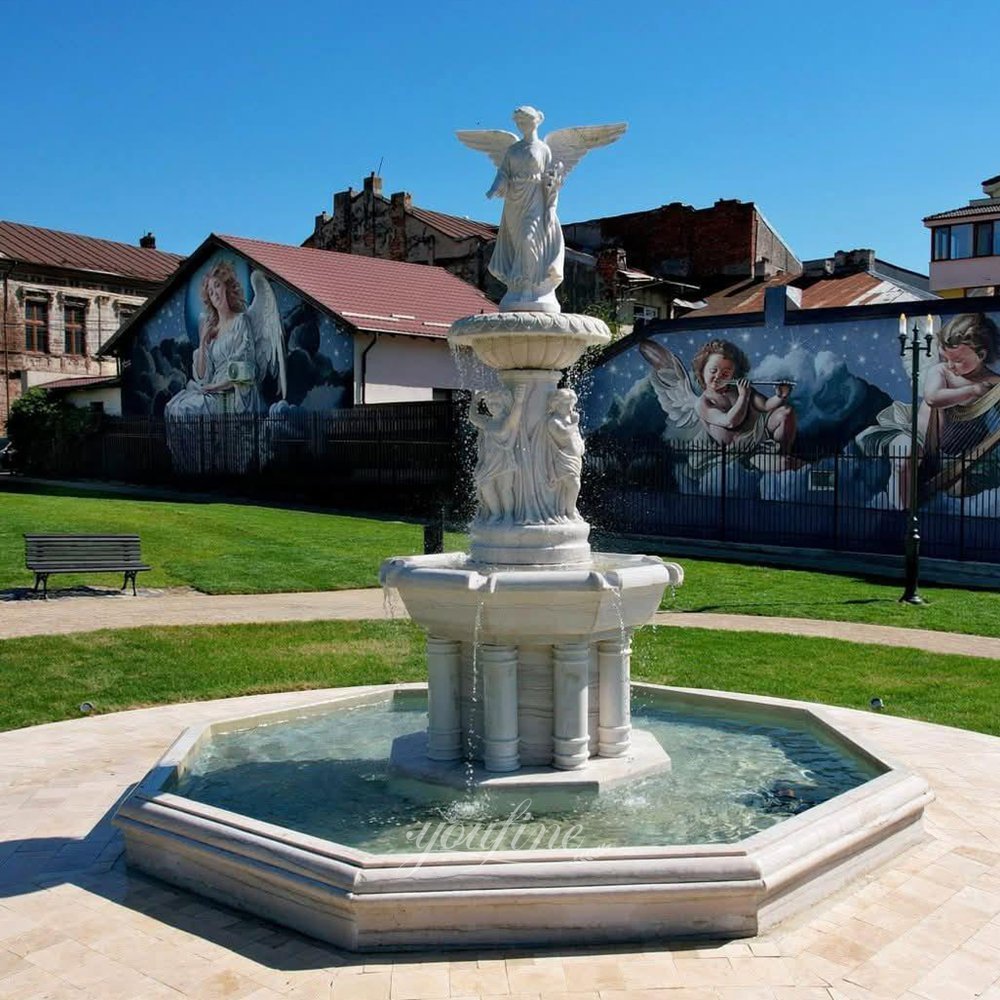
6. Symbolic Meaning: Life and Baptism
Considering the symbolic meaning of a fountain during the design phase can enhance its depth. For example, a three-tiered fountain often represents the “Trinity,” and a circular base represents God’s eternity.
The location of the fountain also often carries symbolic meaning:
Entrance fountain: Symbolizing purification before entering a sacred place.
Fountain in the center of the courtyard: Symbolizing the core of faith.
Fountain in the meditation area: Symbolizing inner peace and contemplation.
This is why we often need to be particularly careful when choosing a fountain.
7. Safety: Protecting Every Visitor
The church is a community for all ages, and is frequently visited by the elderly and energetic children.
Stability: The fountain base must be reinforced to prevent tipping.
Depth Control: The pool depth must comply with local safety standards to prevent accidental drowning.
Anti-slip Design: The marble paving around the fountain should be treated with an anti-slip surface.
Avoid complex and sharp decorations.
8. Long-Term Maintenance: Low Cost and Climate Adaptability
For non-profit churches, low maintenance costs are crucial:
Frost Protection Design: In cold regions in Europe and North America, the stone materials must have excellent freeze-thaw resistance, and the water supply system should be designed for easy drainage.
Hardware Replacement: Water pumps should be readily available and easy to replace.
Night Lighting: Provisions should be made for LED lighting interfaces to enhance safety at night and create a sacred nighttime ambiance.
9. Professionalism in Communication: Do They Truly Understand the Church Setting?
Choosing a supplier who truly understands church projects can save significant communication costs. From design drawing confirmation to logistics and customs clearance, a professional partner can ensure that every step is accurate and flawless.
The professional supplier should possess the following qualities:
Familiarity with religious and public space applications.
Ability to provide reasonable suggestions based on the usage scenario.
Clear, professional communication with a supporting successful case shows.
Conclusion
For a church, a suitable marble fountain doesn’t need to be ostentatious, but it should stand the test of time. It should be quiet, stable, and dignified, subtly influencing everyone who enters the church.
As an outdoor fountain factory with many years of experience in international church projects, we deeply understand the sacred mission behind every fountain. Whether you need a traditional tiered fountain or a custom piece incorporating religious sculptures, we can provide you with one-stop services including material selection, design, and production.
If you are planning a fountain project for your church, please feel free to contact us. YouFine will provide you with free design proposals and professional advice, and work with you to create a tranquil and sacred spiritual space.
Frequently Asked Questions:
Q1: Do church fountains always need to be custom-made?
A: Most church projects involve a degree of customization to ensure that the size, style, and symbolism match the site.
Q2: Are marble fountains suitable for long-term outdoor use?
A: High-quality natural marble is very suitable for outdoor environments, and with proper structure and installation, it can last for decades.
Q3: How can church fountains be used in cold regions?
A: Anti-freezing designs, winter drainage, or seasonal shutdown plans can ensure the safe operation of the fountain.
Q4: Can we provide our own design drawings for the religious statues for customization?
A: Absolutely. Our experienced sculptors can reproduce the details of the religious statues 1:1 based on the drawings or photos you provide, and perfectly integrate them into the fountain structure.
Q5: Is the installation complicated?
A: We will provide detailed installation drawings and numbered instructions, and even installation videos. For large projects, we can also provide remote video guidance or on-site installation services to ensure a stable and safe installation process.